

There is a conversation happening in your mouth that never quite stops. All day, in the film of saliva over your teeth, minerals leave the enamel surface and minerals return to it. When the two are in balance, the hardest tissue your body makes stays hard. This slow exchange is the whole story of mineral oral care, and it is older than any toothbrush.
This guide is a plain look at the science and the tradition behind mineral toothpastes: what enamel is, what hydroxyapatite and pearl actually are, what the research does and does not show, and where the old botanical practices fit. It is background reading, not medical advice; if you have a specific concern about your teeth or gums, see a dentist.
Enamel is roughly 96% mineral, and that mineral is hydroxyapatite, a crystalline form of calcium phosphate. It is the hardest substance the human body produces, yet it is not fixed. Acids from food and drink dissolve a little mineral from the surface (demineralisation); saliva, rich in calcium and phosphate, carries mineral back (remineralisation). Healthy teeth live inside this daily back-and-forth. Everyday oral care, brushing, keeping the mouth clean, is really about keeping that balance tipped the right way.[1]
Because enamel is made of hydroxyapatite, a hydroxyapatite toothpaste is putting back a form of the same mineral the tooth is built from, rather than a substitute for it. This is why it is often called biomimetic: it mimics what the body already makes. Fine particles of hydroxyapatite can settle into the microscopic pores of the enamel surface and act as a reservoir of calcium and phosphate; very small particles (around 20 nanometres, close to the size of natural enamel crystals) are the ones researchers associate with reaching deeper surface pores.[2]
Hydroxyapatite has a long safety record in oral care, and in July 2025 the EU's Scientific Committee on Consumer Safety confirmed nano-hydroxyapatite as safe for use in toothpaste at the concentrations assessed.[3] It is worth being clear-eyed, though: supporting the mouth's own everyday mineral balance is maintenance, and no toothpaste rebuilds a tooth or reverses dental disease. Those are matters for a dentist.
Pearl is mostly aragonite, a different crystalline form of calcium carbonate, and it naturally carries trace minerals such as magnesium, strontium and manganese.[4] Pearl has been valued in East Asian herbal tradition for a very long time, and it has recently drawn interest from dental researchers.
Here it pays to be honest about the evidence, because it is easy to overstate. In one laboratory (in-vitro) study on extracted teeth, adding nano-pearl to a sealant raised the treated enamel's surface microhardness by about 20% compared with the sealant alone.[5] That is a real result, but it is a small, single-laboratory study, on extracted teeth, using pearl inside a sealant rather than a standalone toothpaste, and it did not compare pearl against hydroxyapatite. Early research like this is genuinely interesting; it is not proof that any product remineralises your teeth, and we will not pretend otherwise.
For most of human history, oral care was botanical: frayed twigs, salt and clay, herbs chewed for the breath. Several of those traditions have since been examined in the laboratory at the level of single plant compounds.
In every case this is research on the compound, often at defined laboratory concentrations. It tells you why these plants have been valued; it is not a promise about what a finished toothpaste will do for you.
Most toothpastes are mostly water. Water is what forces a paste to rely on emulsifiers, foaming agents and preservatives, and it is what lets delicate plant polyphenols degrade and bicarbonate react before you ever open the tube. Remove the water and the problem changes: the minerals stay dry, the botanicals stay stable, and nothing needs preserving, because microbes cannot grow where there is no water. The formula simply waits in the jar until it meets saliva on the brush.
Enamel is made of hydroxyapatite and lives in a daily exchange of minerals. Mineral toothpastes work with that everyday rhythm; they do not rebuild teeth or cure disease. Hydroxyapatite and pearl are both calcium minerals with a real, if still early, research story, and the botanical tradition around them is genuine and worth telling honestly, caveats and all.
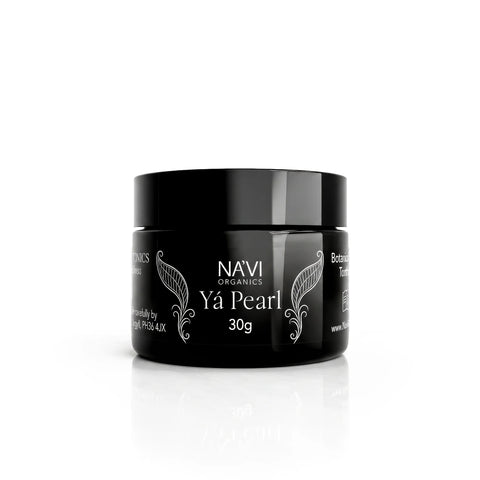
Our own take on this is Yá Pearl, a waterless botanical mineral toothpaste hand-blended in the Scottish Highlands, made with hydroxyapatite, pearl and this circle of plants.
References
This article is general background information about ingredients and traditions. It is not dental or medical advice and does not describe the effect of any specific product. For advice about your teeth or gums, please see a dentist.