
Skip to content

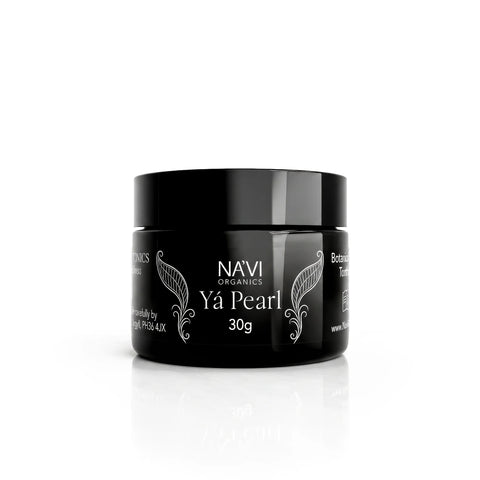
Yá Pearl | Botanical Mineral Toothpaste | Dual Hydroxyapatite

Sold out
£24.95

The minerals your teeth are made of, returned to them daily.

Your enamel is almost entirely one substance — a crystalline mineral called hydroxyapatite. Every meal, every sip, every day, tiny amounts of it dissolve away. Saliva does its quiet work to put it back. Yá Pearl was made to support that ancient rhythm — not to coat or mask, but to rebuild, with the very minerals your teeth recognise as their own.

A four-tier mineral system. A circle of traditional Chinese herbs. A wild-harvested resin the tree gives freely. Hand-blended in small batches in the Scottish Highlands.


The Story

The character 牙 (Yá) is one of the oldest in the Chinese language — an oracle bone script written some three thousand years ago, picturing two tusks meeting. It means tooth, fang, ivory: the body's hardest mineral.

Pearl is its complement — the slow mineral of the sea, layered for years inside an oyster shell, prized in Chinese medicine for over two thousand years for the mouth and gums.

Yá Pearl is what happens when these two ancient minerals meet a quiet circle of botanicals, in a paste made the slow way at our Highland workshop near Loch Shiel. Earth and sea. Tusk and tide.

For most of human history, oral care was a botanical practice. Frayed twigs, salt and clay, herbs chewed for breath and gum tone. The wisdom was simple: keep the mouth clean, keep the tissues strong, let the body do the rest.

Yá Pearl belongs to that lineage, but it carries something the old apothecaries couldn't have known — that the minerals your teeth are made of can now be returned to them in forms they recognise. Not one mineral, but two: hydroxyapatite, the crystalline calcium phosphate of enamel itself, and pearl — aragonite, the same mineral nacre is built from.

Around this mineral core we've gathered a quiet circle of botanicals long valued in traditional Eastern medicine for the mouth: Honeysuckle for the gums, Patchouli for breath and tissue tone, Psoralea for its antibacterial flavonoids, and pure Bakuchiol — the oil-soluble heart of the Psoralea seed — for its remarkable activity against the bacteria associated with oral health.

To this we've added a frankincense most people will never have encountered. Boswellia neglecta from Kenya — Black Frankincense — collected from a tree that releases its resin freely, without tapping, without wounding the bark. It is one of the rarest and most ethically harvested forms of frankincense in the world.

And the carrier itself is unusual: anhydrous, oil-based, with no water at all. Single-estate biodynamic castor oil from Homa Farm — gently anti-inflammatory, used in oral care for centuries — holds everything in suspension. There are no foaming agents, no flavour disguises, no preservatives needed because there is no water to preserve.

No fluoride. No SLS. No sweeteners, artificial or otherwise. Just minerals, plants, and the slow chemistry of healing.


The Science

What "biomimetic" means

Bio — life. Mimetic — mimicking. A biomimetic ingredient is one that matches something the body already makes, so closely that the body accepts it as its own. Hydroxyapatite is the most directly biomimetic remineralising mineral known — because it isn't like enamel. It is enamel.

Your enamel, briefly

Tooth enamel is roughly 96% mineral, and that mineral is hydroxyapatite — a crystalline calcium phosphate. It's the hardest substance your body produces, but it isn't static. Acids dissolve mineral from the surface every day; saliva carries minerals back. Healthy teeth live in this constant exchange. When demineralisation outpaces remineralisation, you feel it first as sensitivity, then dullness, then decay.

The four-tier mineral system

Most remineralising toothpastes use a single particle size. Yá Pearl uses four — across two complementary mineral chemistries — each chosen for a distinct function in the cycle of repair.

Hydroxyapatite, 200 nanometres — the deepest worker. At this scale, particles enter subsurface enamel lesions and microporosities the eye cannot see, depositing calcium and phosphate directly into the matrix.

Levigated Pearl, ~500 nanometres (50,000 mesh) — the pearl is roughly 90% aragonite, a different crystalline form of calcium carbonate, carrying trace minerals that hydroxyapatite alone cannot deliver: magnesium, strontium, manganese. These minerals substitute into the apatite crystal lattice and are thought to improve acid resistance. In vitro studies of nano-pearl have shown enamel surface microhardness increases of around 20% — outperforming nano-hydroxyapatite alone.

Hydroxyapatite, 4.5 micrometres — surface polishing and calcium and phosphate ions available at the enamel surface. Settles into the outer enamel structure, fills micro-defects, and leaves the tooth surface smoother — which means less for stains and bacteria to cling to.

Levigated Pearl, ~13 micrometres (1,000 mesh) — gentle mechanical cleaning. Aragonite has a Mohs hardness of around 3.5, softer than enamel (5), so it lifts plaque and surface stains without scratching.

Together, the four particles span 200 nanometres to 13 micrometres — surface to subsurface, polishing to deep repair. Two minerals, four functions, one continuous conversation between paste and tooth.

Most fluoride toothpastes work by converting your existing enamel into a harder, more acid-resistant form. Yá Pearl works differently — it supports the body's own rebuilding process with native minerals. A subtle distinction, but for us, an important one.

The botanical circle

Surrounding the mineral core is a botanical formula drawn from traditional Chinese medicine. Each ingredient earns its place; nothing is there for show.

Honeysuckle (Jinyinhua) — cooling in TCM, traditionally used for the gums. Modern research identifies chlorogenic acid as a key active that disrupts the formation of bacterial biofilms.

Psoralea (Bu Gu Zhi) and Bakuchiol — Psoralea seed has a long Chinese history; bakuchiol is its oil-soluble heart, the molecule that does the dental work. We use both the whole-plant extract for its broader flavonoid profile and a 98% pure bakuchiol, supercritical CO₂ extracted, dissolved directly into the castor oil phase.

Patchouli (Huoxiang) — astringent and freshening, traditionally used in oral care for breath and tissue tone.

Pearl (Zhen Zhu) — beyond its mineral role, pearl carries over two thousand years of TCM oral care heritage. Calming to the Heart, clearing to the Liver, traditionally used for gum and throat support.

Cocoa Extract (Theobromine) — theobromine, the alkaloid that gives cacao its lift, is researched for its support of hydroxyapatite crystallite formation in the presence of calcium and phosphate.

Black Frankincense (Boswellia neglecta) — wild-harvested in Kenya from trees that yield their resin without manual tapping or injury. Steam-distilled, the oil is rich in alpha-pinene and alpha-thujene, both extensively studied. The same oil from our wild-harvested range — at 0.5% in this formula.

Mined Sodium Bicarbonate — most bicarbonate of soda is synthesised industrially through the Solvay process. Ours is mined, not made — natural soda ash from ancient mineral deposits. It carries a gentle alkalinity that, on contact with saliva, helps neutralise acids in the mouth. One of the oldest oral care ingredients on Earth.

Castor Oil from Homa Farm — biodynamically grown on a single estate, expeller-pressed and unrefined. Castor oil is gently anti-inflammatory in its own right, and an unusual carrier for toothpaste — most toothpastes are water-based, which forces them to rely on synthetic emulsifiers, foaming agents, and preservatives. Ours simply carries the minerals and herbs in their dry form, keeping bicarbonate and polyphenols inert until brushing.

Why anhydrous matters

Most toothpastes are mostly water. This creates a problem: polyphenols in herbal extracts degrade in alkaline aqueous conditions, and bicarbonate becomes reactive the moment it dissolves. Manufacturers solve this with preservatives, stabilisers, and pH adjusters.

We solved it differently. By removing water entirely, everything stays inert in the jar — minerals dry, herbs stable, bicarbonate dormant. The chemistry only awakens when the paste meets saliva on the brush. Two minutes of active work, twice a day. The rest of the time, the formula simply waits.


How to Use

Brush morning and night, two minutes, gentle pressure. Spit, don't rinse — let the minerals stay on the enamel surface and continue working. Safe to swallow in normal use, though spitting is best practice for any toothpaste.

For sensitive areas, work a small amount along the gumline with a clean fingertip after brushing.

Yá Pearl is hand-blended in small batches at our Highland workshop near Loch Shiel. Like everything we make, it's traceable to its source, formulated with intention, and made for daily ritual rather than quick fix.