

Inside the hive, in the warm dark of the comb, the bees are making something few people ever see. They gather pollen from a thousand flowers, press it into the wax cells with their heads, seal it with a drop of honey, and leave it to transform. Weeks later it has become something richer and rarer than pollen ever was. The beekeepers of Eastern Europe have a name for it. They call it bee bread.
Bee bread, also known as perga or ambrosia, is bee pollen that the bees have fermented inside the honeycomb. After packing the pollen into the comb cells and sealing it with honey and a little of their own enzymes, the bees leave it to undergo a slow lactic fermentation. Over the following weeks the pollen is gently broken down and preserved, much as cabbage becomes sauerkraut or milk becomes yoghurt. What emerges is bee bread: denser, tangier and more complete than the loose pollen it began as. It is the food the colony stores to feed its young, and it is one of the rarest things a hive will give.
Bee bread is made by the bees, not by us. A forager returns to the hive with pollen packed on her legs. House bees take it, press it tightly into a comb cell, and top each cell with honey. Sealed away from the air, the pollen begins to ferment. Lactic acid bacteria and the bees' own enzymes slowly transform it, lowering its acidity and preserving it for the months ahead. The whole process unfolds inside the comb over two to three weeks. To harvest it, the beekeeper must carefully open those cells by hand, which is why bee bread is gathered in such small amounts and treasured so highly.
Bee pollen and bee bread begin as the same thing, but fermentation sets them apart. Raw bee pollen is the loose granules collected at the hive entrance, each grain wrapped in a tough outer wall. Bee bread is that same pollen after the bees have fermented it in the comb. The fermentation softens and breaks down the pollen's hard outer shell, which can make its nutrients easier for the body to reach. Bee bread is also more stable, less likely to spoil, and carries a deeper, more complex flavour. In short, bee pollen is the raw ingredient, and bee bread is what the hive makes of it.
Bee bread tastes alive. There is sweetness from the honey it was sealed with, a tang from the fermentation, and a deep, almost bready note underneath, which is how it earned its name. Some find it slightly sour, others floral, and the flavour shifts with the flowers the bees foraged and the season they gathered them. It is bolder and more savoury than honey, and quite unlike the dusty taste of raw pollen. A little goes a long way.
Bee bread is best enjoyed simply. A teaspoon a day is a gentle place to begin. You can take the granules on their own, letting them soften on the tongue, or stir them into a spoon of raw, unheated honey. They fold beautifully into yoghurt, porridge or a smoothie, and many people enjoy them sprinkled over fruit. There is no need to heat them, as bee bread is a living food and is at its best raw and unhurried.
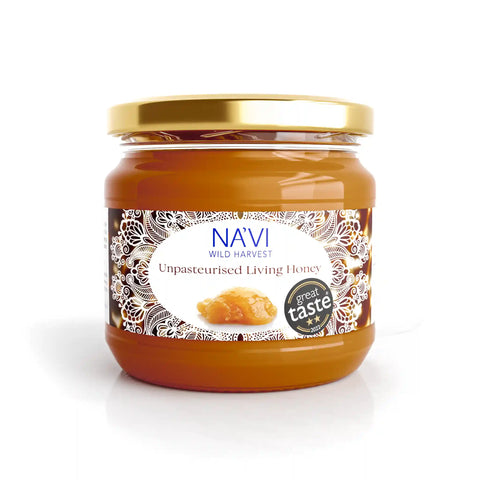
Our bee bread comes from a family of beekeepers we have known for years, who keep their hives high in wild mountain meadows, far from spray and traffic. The bees forage freely across alpine wildflowers, and the bee bread is gathered by hand, in small amounts, exactly as the hive made it. Nothing is added, and nothing is taken away. You can find it in our bee products collection, alongside our raw, unheated honey.
Bee bread is one of those foods that reminds you how much intelligence there is in the natural world. It was never designed for us. It was made by bees, for bees, and we are simply fortunate enough to share in a little of it. If you are curious, begin with a single spoonful, and let the hive introduce itself.